Have you ever jolted awake after a dream where an angry elephant stomped its way through your mind? That vivid image isn’t random—it carries a weighty emotional message from your subconscious. Dreams featuring angry elephants often show up when feelings feel too large to handle or when internal tension bubbles just beneath the surface. But what exactly does this symbol mean on a deeper level?
- Understanding Angry Elephant Dreams
- Cultural Mythology and Symbolism of Elephants
- Astrology’s Perspective on Emotional Turbulence in Dreams
- Trauma-Informed Lens on Angry Elephant Dreams
- Honest Confrontation: Dream Messages about Self, Relationships, and Society
- Reclaiming Anger as a Source of Healing and Courage
Understanding Angry Elephant Dreams
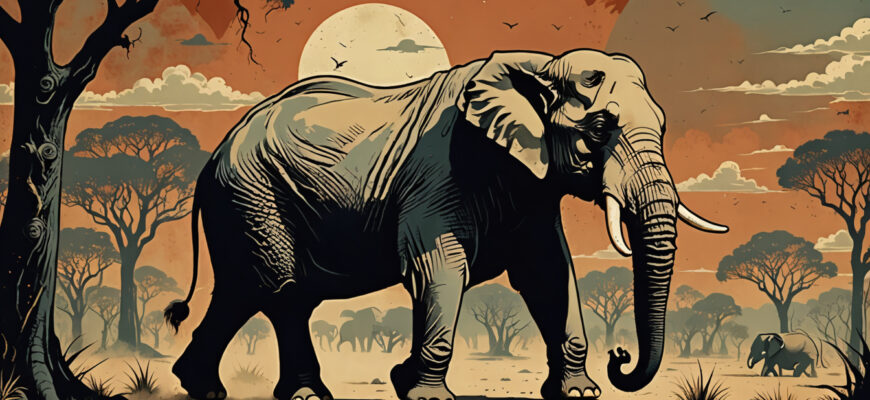
Angry elephants in dreams tend to represent powerful emotions pressing for release. They stand for feelings like frustration, overwhelm, or even hidden rage that might be hard to express while awake. These massive creatures can embody the psychological weight of emotional turmoil, signaling that something huge in your life needs attention.
Dreams with raging elephants often mirror your struggles with being overwhelmed—maybe you’re juggling too many demands or carrying the burden of unspoken feelings. An angry elephant trampling through your sleepscape might also reflect underlying power struggles, whether at work, with friends, or within yourself. It’s like your subconscious is showing you the impact of these conflicts in a raw and undeniable way.
Recurring dreams featuring an angry elephant often point toward unresolved conflicts or trauma. When an issue isn’t fully faced or healed, it lingers like the elephant’s memory—persistent and unyielding. This imagery can be a call to acknowledge what’s been buried, to confront past wounds with courage rather than avoidance.
Interestingly, elephants in dreams are double-edged symbols. The anger of the elephant expresses danger but, just as much, strength. This creature’s raw power in your dreams is a reminder that within feelings of threat or chaos lies immense resilience. It’s both a warning and an invitation to harness your own inner strength to move through difficult emotions rather than letting them crush you.
Cultural Mythology and Symbolism of Elephants
Elephants carry rich symbolism across cultures, often blending wisdom and strength with moments of wrath. In South Asia, elephants embody wisdom and good fortune, exemplified by the revered Ganesha, the elephant-headed deity who clears the path forward. Yet, an angry elephant flips that narrative, signaling disruption and a shake-up of status quo.
In many indigenous stories, elephants represent memory and deep family bonds, but also stubbornness and the potential for destruction when pushed too far. That nuanced mix of traits makes the angry elephant a potent emblem in dreams, capable of speaking to ancient fears and fierce protection alike.
Reinterpretations through a feminist and queer lens reveal yet another layer. Here, the elephant’s power intersects with vulnerability—recognizing the strength in standing firm while also honoring the tenderness beneath. This perspective honors how anger can be a political and transformative force rather than something to suppress.
| Symbolic Aspect | Meaning in Dreams |
|---|---|
| Wisdom | Guidance, insight, inner knowing |
| Strength | Resilience, protection, power |
| Wrath | Warning, upheaval, unaddressed issues |
| Memory | Unresolved trauma, past influence |
| Stubbornness | Resistance, boundary-setting |
Often, the cultural stories we carry shape how elephants show up in our dreams. These narratives become part of the personal symbolism your subconscious taps into when it conjures an elephant. The dream world becomes a bridge linking societal expectations with your inner landscape—questioning identity, power, and belonging.
Astrology’s Perspective on Emotional Turbulence in Dreams
Astrology adds a cosmic dimension to understanding these dreams. The giant elephant aligns well with Jupiter’s expansive energy, which teaches about growth but also the importance of healthy limits. If an angry elephant appears, it might hint at where Jupiter’s lessons are needed—like learning to say no or realizing where boundaries have been blurred.
The moon’s role is also key in shaping how such charged dreams feel. The moon rules emotions and memory, so the tides of your inner world can swell and recede, affecting dream intensity. Those angry elephant dreams could be echoing a lunar cycle that stirs deep feelings, urging emotional honesty.
Saturn, often seen as the taskmaster, challenges us to take responsibility for the parts of our lives we’d rather avoid. In dreams, an angry elephant can reflect Saturn’s call to face difficult truths—whether around setting boundaries, owning your behavior, or confronting uncomfortable realities that hold you back.
- Jupiter: Expansion, wisdom, boundary awareness
- Moon: Emotional cycles, empathy, past wounds
- Saturn: Accountability, structure, confronting limits
Astrological transits can amplify the emotions behind these dreams, spotlighting buried feelings and inviting reflection. This is the cosmos encouraging a brave look inward, revealing where healing and growth can unfold.
Trauma-Informed Lens on Angry Elephant Dreams
What’s really going on when an angry elephant charges through your dreams? That giant beast might be more than just a scary symbol—it could be your psyche revealing unresolved trauma. When faced with aggressive imagery like this, the dream is often a loud invitation to acknowledge wounds that haven’t had the space to breathe.
Anger hides beneath the surface of pain and neglect, especially when it hasn’t been witnessed or validated in waking life. Those dreams can highlight how trauma festers silently, turning into an internal storm. Through this lens, that angry elephant represents a primal response to harm—a visceral call from the body and soul saying, “This matters.”
Honoring anger in this context means moving beyond shame or the urge to suppress. It’s about witnessing the rage as a legitimate reaction to neglect, injustice, or betrayal. This is where trauma-informed care meets dreamwork: the goal isn’t to erase anger but to hold it compassionately. By naming and feeling it, a person gives anger a container, preventing it from turning destructive or isolating.
Healing happens when these dream images become allies rather than enemies. Working with dreams transforms fear—fear of rage, fear of being too much—into embodied empowerment. Techniques like journaling dream details, mindful breathing, or gentle movement can help anchor the lessons. With patience, the dream elephant that once felt overwhelming can become a guide to self-trust and boundary setting, reflecting back the strength within.
From a queer, feminist viewpoint, anger shifts from an obstacle to a tool of liberation. Queer and feminist narratives often reclaim anger as a force that disrupts systems built on silencing and compliance. That furious elephant isn’t about chaos for chaos’s sake. It’s a radical roar against erasure, a refusal to shrink into safety. In cultures that have historically told femmes, queers, and marginalized folks to “calm down” or “quiet down,” dreaming of such potent anger calls forth power that has long been denied.
Approaching these dreams with this perspective invites a reimagining: rather than battling anger, what if anger was the key to breaking free? That dream elephant charges not just at internal shadows but at external systems demanding silence. Your rage in dreaming space is sacred—it’s a signal of survival and a beacon towards authentic, fierce selfhood.
Honest Confrontation: Dream Messages about Self, Relationships, and Society
Angry elephant dreams don’t pull punches. They barge into your subconscious ready to expose the parts of yourself or your world where honesty has been in hiding. Much like a dream mirror refusing to gloss over the cracks, these illusions challenge self-deception and avoidance. If parts of you are pretending everything is fine while simmering in suppressed frustration, the elephant’s fury demands a sit-down with those truths.
When it comes to relationships, these dreams can pinpoint toxic patterns masked by politeness or denial. Maybe there’s a boundary repeatedly crossed without pushback, or emotional labor piled onto your shoulders without acknowledgment. That elephant’s rage breaks through the polite facade and says: the imbalance is real, and it’s exhausting. Personal dynamics operating under gaslighting or control can’t hide when you’re dreaming of this beast.
Society’s weight also creeps into these nightly encounters. Collective pressures and rigid norms that expect conformity show themselves in elephant symbolism. Often, the angry elephant is a metaphor for the brutal force of societal expectations crashing down—be it around gender roles, career paths, or communal identities. The dream whispers distrust of “good citizen” scripts that demand silence over rage, sacrifice over anger.
Truth-telling in this light becomes an act of reclaiming agency—not just within your own life but as a ripple into collective transformation. Speaking your truths, setting firm boundaries, and calling out dysfunction are forms of empowerment reverberating far beyond the dream world. The angry elephant says loud and clear: standing in your reality gives you the power to redraw the lines where you once felt trapped, unheard, or unseen.
It’s like waking from sleep into a knowing: your anger is not a mistake, but a compass pointing toward authenticity. Clarity and courage come from naming what’s broken, whether inside or outside. With that, you rewrite the story, owning your space and voice in relationships and society with newfound confidence and grace.
Reclaiming Anger as a Source of Healing and Courage
Anger gets a bad rap, constantly labeled as “negative” or destructive. This myth blames the emotion instead of the context that creates it. Actually, anger is a vital part of the emotional spectrum—a clear signal from the body that something needs to change. Recognizing anger as a messenger frees it from guilt or suppression.
Channelling anger isn’t about eruptions or chaos. It’s about clarity and courage. The raw energy that fuels rage can be redirected into action that stands for your values and your boundaries. Whether it’s holding a difficult conversation, advocating for justice, or simply saying no, anger lights the path.
This fiery energy also sparks transformation. When anger is embraced without shame, it becomes a tool for authentic self-expression. Rather than hiding parts of yourself to avoid conflict, anger pushes you to reveal honest feelings and needs, paving the way to deeper connection—not only with others but within yourself.
Most importantly, anger’s power can fuel liberation. It’s an invitation to break open old narratives of passivity or self-doubt. By owning your anger, you step into a fierceness that resists being minimized or erased. That embodied courage invites healing, growth, and an unapologetic claim on your truth.