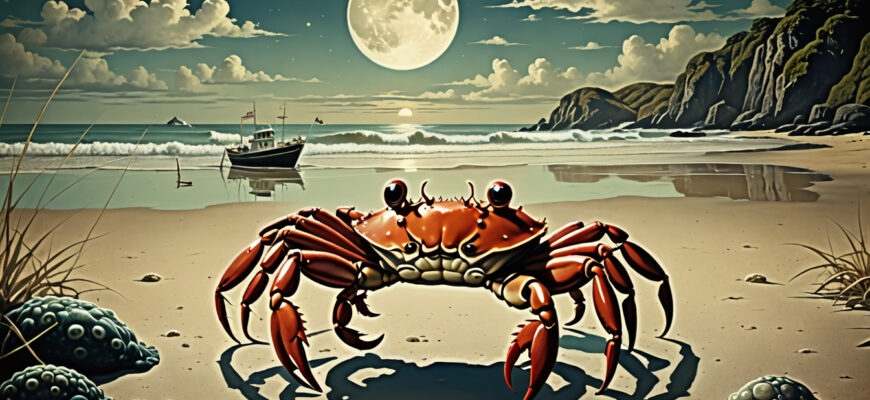
Dreams about baby crabs invite us into a tender, emotional space where fragility and growth intertwine. These tiny creatures, just beginning to navigate their watery worlds, hold a mirror to parts of ourselves that are soft, vulnerable, and in the early stages of development. When baby crabs show up in your dreams, they could be nudging you to tune into the tender beginnings in your own life—whether that’s a new feeling, an idea, or a fresh chapter that hasn’t yet found its resilience. It’s a gentle reminder that growth doesn’t always happen in a straight line, and sometimes the most vulnerable moments are exactly where the deepest healing begins.
Understanding The Symbolism Of Baby Crabs In Dreams
There’s something raw and precious about baby crabs. Unlike their adult counterparts with hard, protective shells, baby crabs often have softer edges that highlight vulnerability. In dreams, this softness reflects a period of emotional growth where defenses haven’t fully formed yet. It’s a space where you might feel exposed—like the emotional equivalent of fresh skin waiting to toughen up.
Consider what new beginnings might be stirring inside you. Baby crabs symbolize those fresh ideas, feelings, or parts of yourself that are just coming into existence. They’re not shielded by a strong outer shell, which means they need care and patience. Your psyche may be inviting you to nurture these newborn aspects, watching over them without rushing their development.
The fragile early phase of any process—emotional, creative, or even spiritual—is easily overlooked since it doesn’t carry the armor of experience and boundaries. Dreams featuring baby crabs encourage honoring those exposed parts without judgment. Rather than pushing to “get tough,” this dream asks: What if protection looked like tenderness instead of hardness?
Intuition plays a powerful role here. The movement and presence of baby crabs in dreams can symbolize the importance of listening to intuitive impulses. There’s wisdom in softening rather than defending rigidly, creating space for emotions and inner nudges to grow and be heard. By nurturing vulnerability, you cultivate a form of strength that’s gentle but deeply rooted.
The Emotional Landscape: Growth, Boundaries, And Protection
When baby crabs appear in dreams, they’re also pointing to the delicate balance between setting boundaries and staying open. Boundaries are important—they keep us safe and create the space where growth can happen. Yet, when everything is too rigid, the softness needed for emotional development gets crushed.
Finding a middle ground means protecting your tender self without shutting down. Imagine a baby crab tentatively moving around, exposed yet curious. This image reflects the emotional maturation process—a dance between shielding your soft edges and expressing what’s real and vulnerable.
Dreams about baby crabs often show emotional growth as something tentative and uneven. Progress might look like testing limits, learning where to say no, or recognizing when it’s okay to ask for support. These dreams highlight that becoming emotionally mature is not about perfection but about learning to honor and defend your needs.
- Are you allowing yourself to stay soft even as you set clear limits?
- Where in your life are your boundaries still forming?
- How do you react when your vulnerability is noticed or challenged?
| Emotional Aspect | What Baby Crabs Symbolize |
|---|---|
| Tender Vulnerability | Soft edges, early emotional growth, unguarded feelings |
| New Beginnings | Fresh ideas or emotions needing care and patience |
| Fragility of Early Phases | Invitations to embrace and honor exposed parts without rushing |
| Intuitive Impulses | The need to nurture vulnerable wisdom emerging from within |
| Boundary Setting | Finding balance between protection and maintaining softness |
By reflecting on where baby crab imagery touches your emotional life, you can identify soft spots that are ready for nurturing rather than shielding with armor. These moments ask for a kind of care that accepts uncertainty and values intuitive guidance. Your emotional boundaries don’t have to be impenetrable walls; they can be gentle borders that allow growth while providing protection.
Movement and Metaphor: Sideways Progress and Molting Cycles
Ever feel like you’re not moving forward in a straight line, yet somehow still making headway? That sideways shuffle of progress is exactly what baby crab dreams embody. Unlike the neat, linear paths society often expects, life tends to unfold crookedly, just like a crab’s travel. These sideways steps point to non-linear growth—where development unfolds in loops, detours, and pauses rather than a smooth trajectory.
Molting is a powerful metaphor wrapped up in the imagery of baby crabs. When crabs shed their shells to grow, they enter moments of vulnerability and discomfort. Molting speaks to the tough process of letting go of outdated parts of the self, even when the act feels exposed or unsafe. It’s that awkward, raw phase where transformation happens beneath the surface.
Dreams about baby crabs invite a recognition that progress is often messy and slow. Picture a tiny crab cautiously navigating sideways, careful not to expose its soft underbelly. This mirrors how inner growth doesn’t always look like bold leaps but includes careful nudges and imperfect rhythms. These dreams acknowledge that discomfort and setbacks are necessary steps toward genuine transformation.
Growth rarely follows a neat schedule or checklist. Baby crab dreams encourage embracing those imperfect rhythms without guilt or judgment. The wobbling, sidelong movements remind that it’s okay to move in ways that feel safer or less certain. Growth can be cyclical and unpredictable, carrying with it moments of retreat, recalibration, and renewed courage.
Lean into the idea that healing and transformation are ongoing, uneven processes. Just as crabs periodically molt to shed what no longer fits, people must release old emotional layers—sometimes slowly, sometimes with struggle. Accept that the process isn’t always graceful or instantaneous, and in that acceptance, a gentler kind of power arises.
Interpreting Baby Crab Dreams Through Queer, Feminist, and Cosmic Lenses
How do dreams about baby crabs come alive when viewed through different lenses? Let’s start with a queer perspective, where fluidity and resilience take center stage. The sideways movement of crabs echoes the non-binary and non-linear trajectories many queer folks navigate in identity and self-expression. These dreams celebrate tender power—strength found not in rigid defense but in adaptability and openness to change. The vulnerability of the baby crab becomes a symbol for cultivating courage amid shifting emotional landscapes.
From a feminist lens, baby crab dreams offer a reclaiming of soft power. Society often sidelines vulnerability as weakness, but these images uplift it as a radical source of strength. Shedding old protective shells parallels reclaiming the right to be tender, receptive, and emotionally honest. Honoring vulnerability becomes an act of resistance—to a culture that prizes toughness over authenticity—and a pathway to reconnect with one’s own inner truth.
Turning to a cosmic perspective, these dreams connect individuals to ancestral currents and spiritual becoming. Baby crabs’ ties to the Moon and water recall lineage, collective memory, and cycles of rebirth that ripple beyond the individual. The dream encourages self-compassion by acknowledging our wounds and growth as threaded into larger, timeless rhythms. Here, growth is less about achievement and more about alignment with cosmic flow and transcendent self-knowledge.
When these three perspectives unite, baby crab dreams become a map for empowerment through self-awareness. They remind that identity is layered and evolving, that vulnerability holds transformative strength, and that deep spiritual roots sustain every step—whether sideways, slow, or shrouded in uncertainty. This integrated view inspires a nurturing space to explore identity, boundaries, emotional healing, and the unfolding journey of self-knowledge.